For decades, the “living room experience” was a sacred, singular focus. The glowing rectangle in the corner of the room held a monopoly on our attention. But walk into any modern household today—or glance down the row of a cinema—and you’ll see a different reality.
The second screen is the new reality.
Multiscreening is the norm +88%Of viewers under 35 use a second screen while watching TV content.
Source: Nielsen
Phones used during films +70%Of younger audiences check phones during films.
Journal of Media Psychology
Commerce is driven by culture +76%Of consumers have purchased something they saw in entertainment content.
Source: Nielsen
Cinema-going is already a UGC moment +60%Of Gen Z post about experiences in real time.
Source: Snap Inc.
According to Nielsen, more than 88% of viewers under the age of 35 are actively engaging with a second device while watching TV. This behaviour isn't confined to the sofa, either. Data from the Journal of Media Psychology reveals a startling trend: over 70% of younger viewers admit to checking their phones while watching a film in a cinema, despite the dark room and the explicit social contract to remain unplugged.
We’ve reached a tipping point where the smartphone isn’t just an accessory; it’s a competitor. For broadcasters and cinema chains, this "Second Screen Dilemma" has long been viewed as an existential threat—a symptom of a disconnected, distracted audience that is harder to monetise and even harder to please.
But what if the second screen isn't the enemy? What if it’s the bridge to a more human-centric, immersive, and hyper-profitable future?
Removing the Friction, Restoring the Magic
The modern viewer faces a paradox: more content than ever, but less satisfaction. The typical living room is a fragmented mess of multiple remotes, multiple streaming apps, and "infinite scroll" fatigue.
When a viewer doesn’t know what to watch, they aren't just bored, they’re frustrated. They spend twenty minutes scrolling through catalogues only to settle for a show they’ve already seen. When they do know what they want, they often have to turn to their phone just to find out which service currently holds the licensing rights.
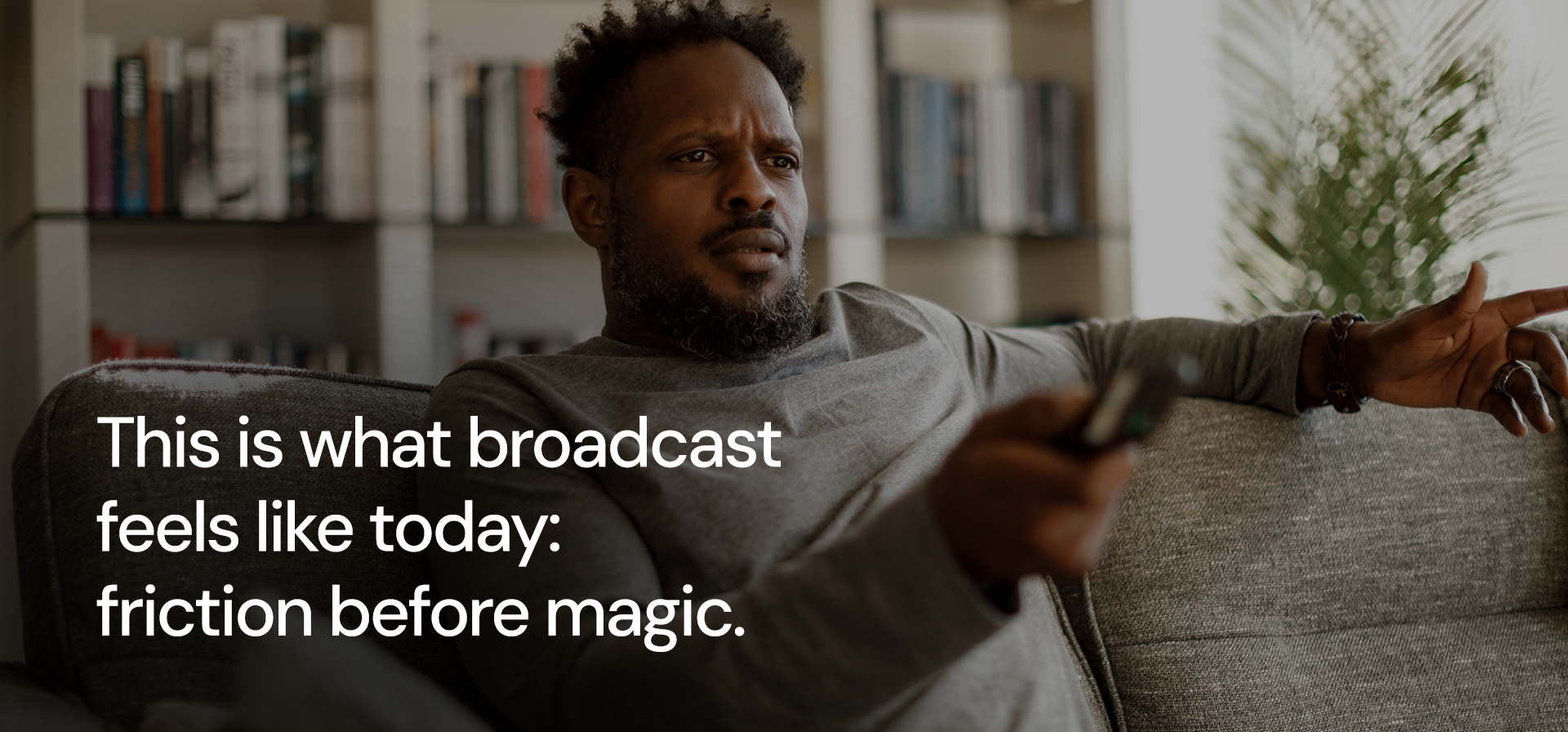
This is where the broadcaster loses. While the viewer is hunting for info on their phone, somebody else is monetising their activity on the second device.
From Distraction to Immersive & Interactive: The AI-Powered Living Room…
The solution isn't to fight the second screen or dismiss it as a fad, but to embrace it. By leveraging agentic AI—specifically an ecosystem connecting tools like Alexa+ embedded Echo Show, Fire TV, and Ring cameras—broadcasters can transform the TV from a passive display into an intelligent concierge.
Imagine a living room that recognises who is on the sofa. Using a camera, the system identifies that a family is present and automatically filters recommendations that are age-appropriate and compelling for both a 7-year-old and a 40-year-old. No remote required. You simply ask, "Alexa, what should we watch tonight?" and your TV, knowing your history and preferences, offers compelling recommendations.
The Immersive & Interactive Experience:
Perhaps you know what you want to watch. That doesn’t always mean you know how to find it. Rather than waste five minutes—or more—hopping in and out of various streaming apps, imagine simply saying “Hey Alexa, turn on the Chiefs game.” Within a few seconds, the game is streaming, with no search time.
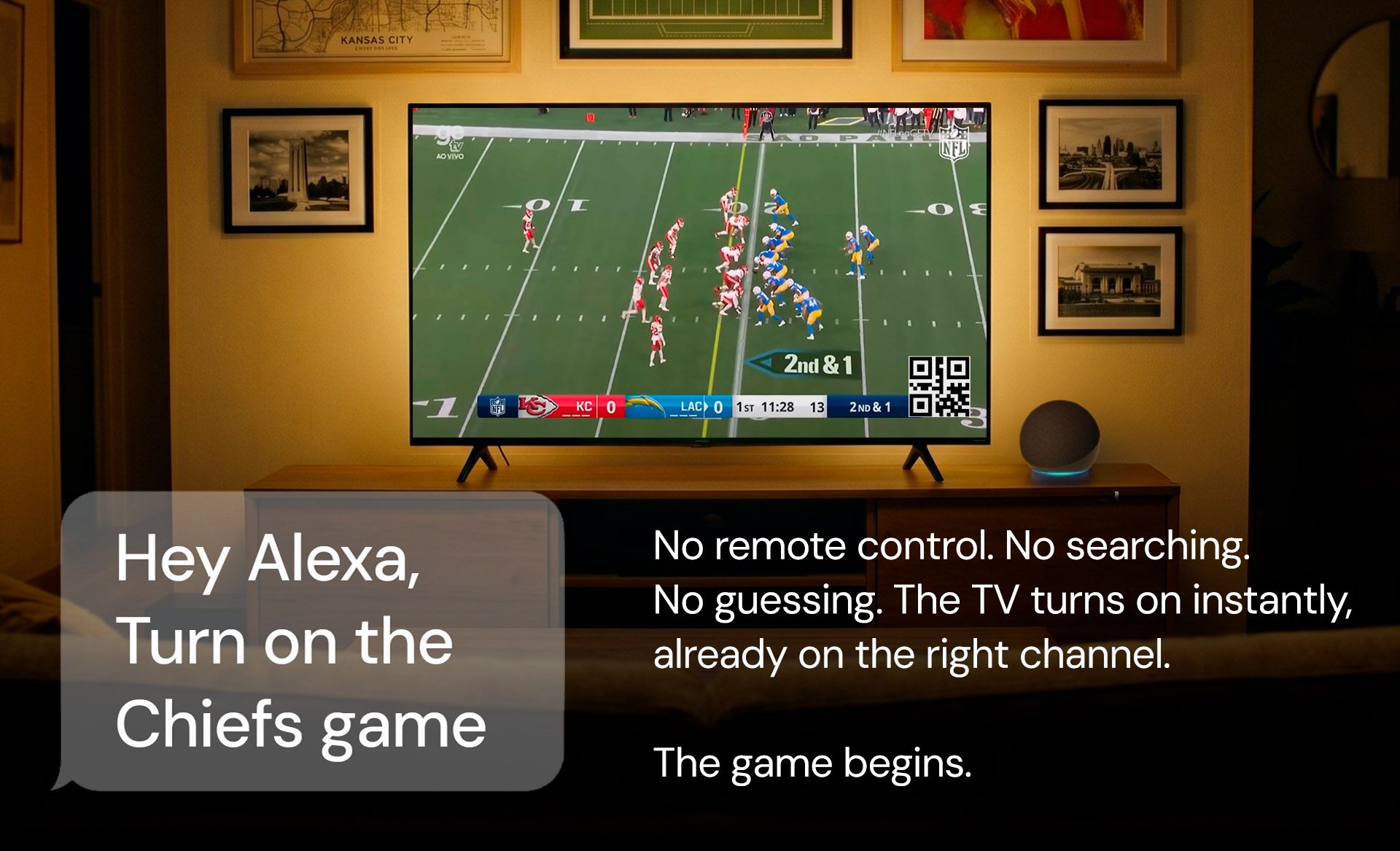
While this is a frictionless entry into the game experience, it is neither immersive nor interactive on its own. By scanning a small QR code in the corner of the screen, you can now connect your second screen to what you are watching. So, what do younger audiences do while interacting with a second screen today? Nielsen research shows that while using a second screen, 71% are looking up content related to what they are watching and 41% are messaging friends or family about it. There is an opportunity for broadcasters and cinemas to merge these two experiences and deliver something truly immersive and interactive.

Imagine being instantly immersed in the content you care most about. Perhaps you’re watching your favourite player walk into the stadium before the big game. You notice his outfit and sunglasses, and think, ”I really like those sunglasses. I want to check them out!” Simply by clicking the shopping tag, you can see all the product details and purchase straight from the experience. You also wonder, ‘What music is he listening to? It would be great if I could see what track that is!’ With live music streaming, his curated pre-game playlist is right there—ready to play instantly on YouTube, so you can jump in and listen with a single click.
And what about stats, betting lines, game history? Because the two experiences are now connected, only the data you care about most is rendered! No more searching, no more distraction! Lastly, you’re engaging. Not just searching multiple social sites separately, but interacting with the social feeds that have specific relevance to the big game. This is just one example of the experience that can be created by converging with the second screen in a more meaningful way.
The Watch Party Reimagined: From Existential Threat to Strategic Partner
For years, broadcasters and cinema chains have viewed user-generated content (UGC) platforms—YouTube, Instagram Reels, TikTok—as existential threats competing for the finite number of "eyeball hours" of the younger generation.
However, the "Watch Party" concept turns this rivalry on its head. Instead of seeing social platforms as competitors, broadcasters can treat them as massive, high-engagement distribution partners.
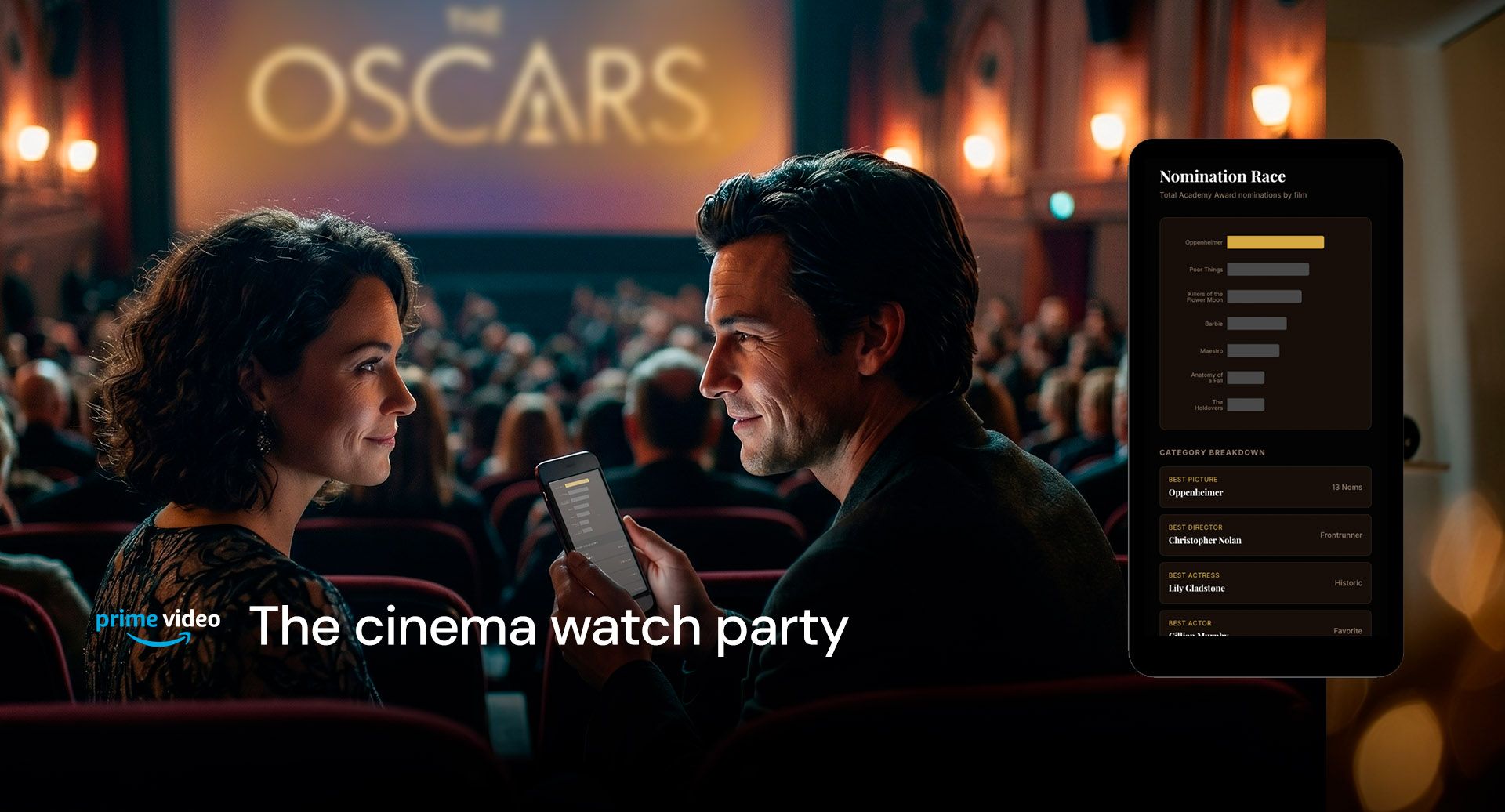
- The Global Living Room: Major event-driven broadcasts—like Monday Night Football, the Oscars, or the World Cup—are just examples of catalysts.
- Cinema Integration: Rather than shaming the 70% of cinema-goers who check their phones, cinema chains can host sanctioned "Watch Parties". These special screenings encourage a younger demographic to interact with the content on their second screens in real time, effectively merging the cinematic scale with the social intimacy of the digital world.
- The Feedback Loop: By enabling viewers to record their reactions through a mobile app and share their own stream on the broadcaster’s official YouTube channel, the broadcaster moves from a "one-to-many" model to a "many-to-many" community.
Unlocking the New Revenue Stack
This isn't just about a better viewing experience—it’s about fundamental shifts in the bottom line. By embracing the second screen and the Watch Party model, broadcasters and cinemas can tap into five distinct new revenue streams:
Revenue Stream Mechanism The Value-Add Hardware Bundling (broadcasters only) Reselling Immersive & Interactive Kits Broadcasters can bundle Amazon Echo, Fire TV Stick, and Ring devices as an 'Immersive & Interactive' (I&I) package. Affiliate Shopping Retail Partnerships Commissions of 5% to 15% on products purchased directly through the mobile-synced experience (e.g. buying a player's shirt during the match). The YPP Model YouTube Partner Programme Turning YouTube from a rival into a partner by sharing ad revenue (typically 55% to creators) from fan-generated Watch Party streams. Data Monetisation (DaaS) Real-Time Product Placement Intelligence Brands behind the products will pay a premium to understand how people engage with them in real time. Strategic Partnerships Social Ecosystems Revenue sharing through integrations with platforms like TikTok, Reddit, or DraftKings for live betting and discussion.The Path Forward: A Human-Centric Approach
The "Second Screen Dilemma" is only a problem if we assume the TV must be the only screen. If we pivot to see the smartphone as a remote control for the viewer's imagination, the landscape changes.
By using AI to remove the friction of discovery and using mobile integration to deepen the connection to the story, broadcasters and cinemas can move from being "background noise" to being the centre of an immersive, interactive, and highly connected universe.